SendLite
A low-bandwidth remittance platform for unbanked and offline communities.
Role
Product designer and researcher
Tools
Vibes.diy
Powerpoint
Word
Project Overview
SendLite was created during a global fintech hackathon to address the barriers faced by unbanked and underbanked individuals in developing regions when sending or receiving money internationally. The goal was to design a fast, affordable, and inclusive remittance platform that functions even without internet access, using USSD, SMS, and blockchain technology to make financial inclusion truly global.
The Challenge
Traditional remittance apps rely heavily on internet connectivity and banking infrastructure, leaving billions of people excluded due to poor service coverage, lack of smartphones, or limited access to financial institutions.
Our challenge was to design a system that:
· Works entirely on low-bandwidth networks (2G and GSM)
· Reduces transfer fees from 7–10% to under 2%
· Maintains security and compliance without requiring data or apps
· Scales globally while integrating with existing mobile money ecosystems
The Process
1. Research & Problem Framing
2. Ideation & Concept Development
3. Product Requirement Document (PRD)
4. Prototyping & User Flow Design
5. Pitch & Presentation
Our final presentation included:A working prototype walkthroughVisual infographics showing blockchain and USSD flowsA go-to-market plan targeting the U.S.–Mexico and Kenya–Uganda corridorsBusiness model and cost breakdown visuals created for stakeholdersWe positioned SendLite as:“A remittance platform that connects people, not just accounts — fast, compliant, and built for everywhere the internet isn’t.”
Research and Problem-Framing
We began by studying global remittance flows and discovered that in 2024, $685 billion was sent to low- and middle-income countries — surpassing foreign investment for the first time.
Through competitor analysis of Western Union, Remitly, and Wise, we identified major pain points:
· High fees
· Long wait times
· Internet dependency
· Limited accessibility in rural areas
We conducted quick persona development to humanize our use cases:
· Carlos: a U.S.-based worker sending money to his parents in rural Mexico
· Maria & Javier: his parents, who rely on basic mobile phones and limited connectivity
These insights grounded our focus on USSD accessibility and blockchain reliability.
Ideation and Concept Development
We brainstormed multiple flow options for senders and receivers, from mobile apps to SMS-based triggers, before landing on a USSD-first system supported by blockchain for instant transaction settlement.
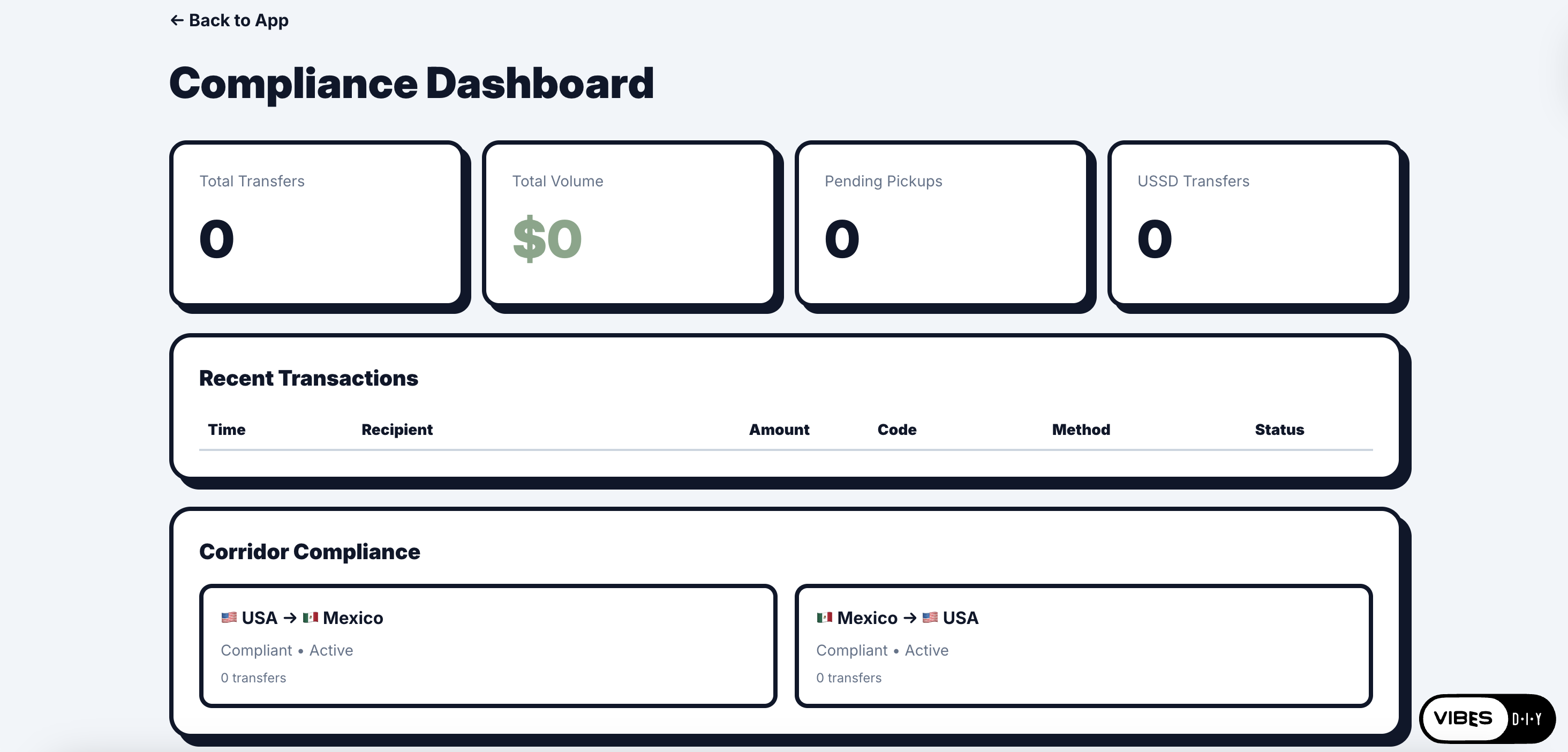
Our “aha” moment came when we realized USSD already connects billions of users through existing mobile towers, removing the need for data or new infrastructure. We also introduced Dynamic Compliance, an automated risk-based system adjusting KYC/AML requirements per transaction corridor and amount, balancing speed, security, and inclusivity.
Product Requirement Document (PRD)
I co-authored the PRD that defined:
· Core MVP features: send/receive flow, USSD interface, compliance engine, agent network
· User journeys for both senders (app-based) and receivers (USSD-based)
· Partnerships with mobile money providers, local agents, and porters (for rural areas)
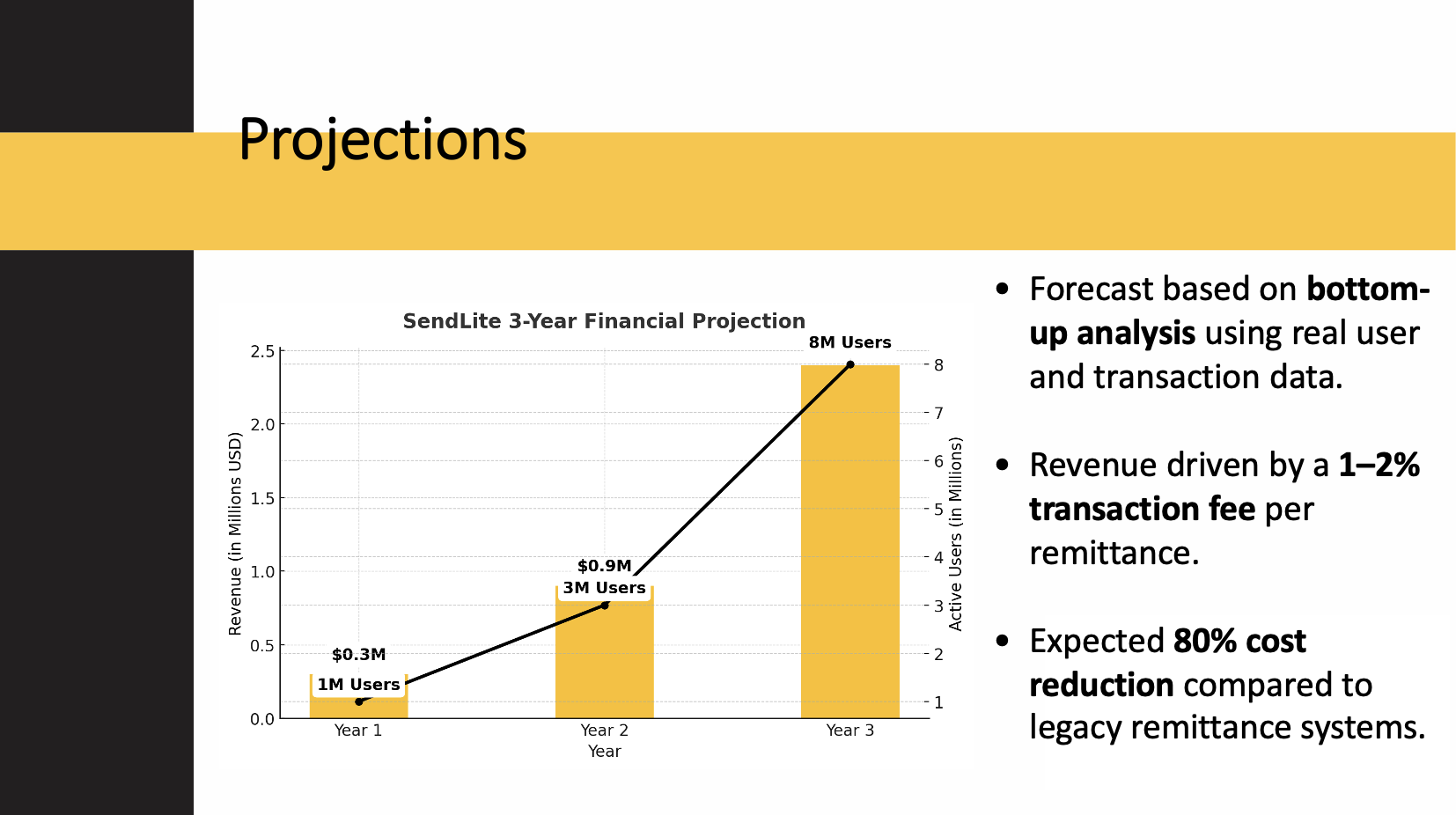
· Revenue model including 1–2% transaction fees, FX spreads, and API partnerships
The PRD became our blueprint for prototype design and the hackathon pitch.
Prototyping
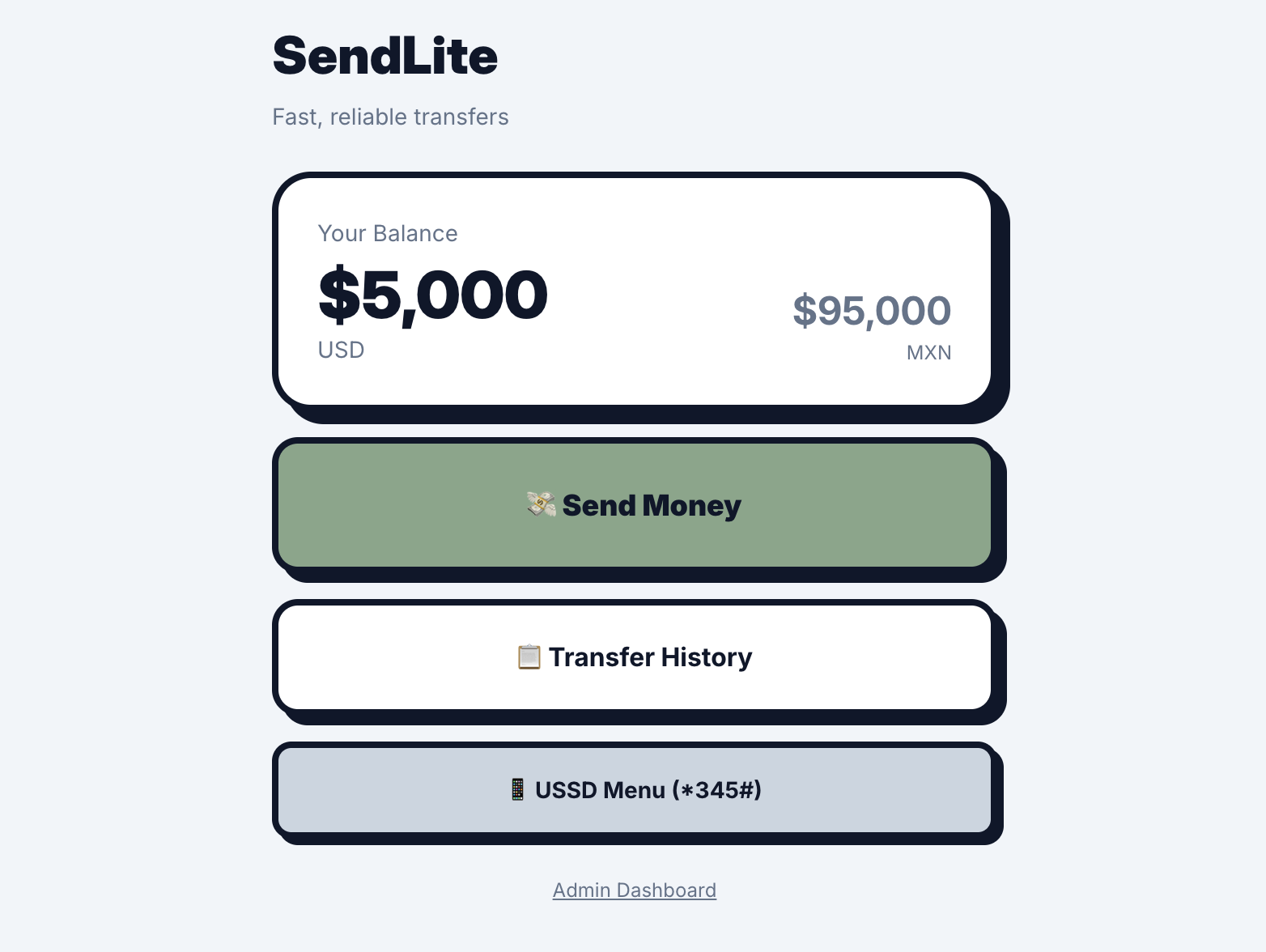
Using Vibes.diy, I helped design:
· A clean, intuitive mobile app interface for senders
· A USSD menu system for receivers to check balances, withdraw funds, or generate cash-out codes
· Visual diagrams mapping blockchain settlement and agent cash-out flows
We ensured every step worked in both online and offline modes, simulating real low-bandwidth use cases.
Pitch and Presentation
Our final presentation included:
· A working prototype walkthrough
· Visual infographics showing blockchain and USSD flows
· A go-to-market plan targeting the U.S.–Mexico and Kenya–Uganda corridors
· Business model and cost breakdown visuals created for stakeholders
We positioned SendLite as:
“A remittance platform that connects people, not just accounts - fast, compliant, and built for everywhere the internet isn’t.”
Reflection
SendLite taught us the importance of designing for accessibility first, not last. By focusing on low-bandwidth inclusivity, we turned what most see as a technical limitation into a competitive advantage.
